
How to Find Recently Released Sarasota County Inmates
Start with the same tool you use to find current inmates. The Sheriff's Arrests & Inmate Search page can show custody and release status where the app exposes it. If a person is no longer listed, that often means a release, a transfer, or a posted bond. The page itself warns that it does not show final case disposition, so it should be paired with the court record.
If the roster does not answer the question, call the Sheriff's Records Section at 941-861-4025, open Monday through Friday, 8 a.m. to 5 p.m., except holidays. Then check ClerkNet for the related criminal case. The court docket may show a bond, plea, sentence, dismissal, or transfer that explains why the person was released. Pull the case through Sarasota County court records.
There is an order that works best here. First, confirm the person is gone from the county roster. Second, check the court docket to see why. Third, if the case ended in a state prison sentence, move to the Florida Department of Corrections search. Fourth, if the matter was federal, use the Bureau of Prisons locator. Each step rules out a system and points you to the next. Skipping straight to a state or federal search without checking the county roster first often wastes time, because most local cases never leave the county system at all.
Sarasota County Release Notifications
You do not have to watch a roster every day. VINELink lets you register for custody and release alerts where the Florida agency feed supports it. It is a free notification service. You search by state and name, then sign up to get a call or email when status changes. Availability depends on whether the relevant Sarasota County or Florida agency sends data to the system, so coverage can differ by agency and by facility.
- Visit VINELink and choose Florida as the state.
- Search by the person's name or offender ID.
- Register for alerts by phone or email to get release and custody notifications.
We pull this lead-in from the official VINELink notification portal.
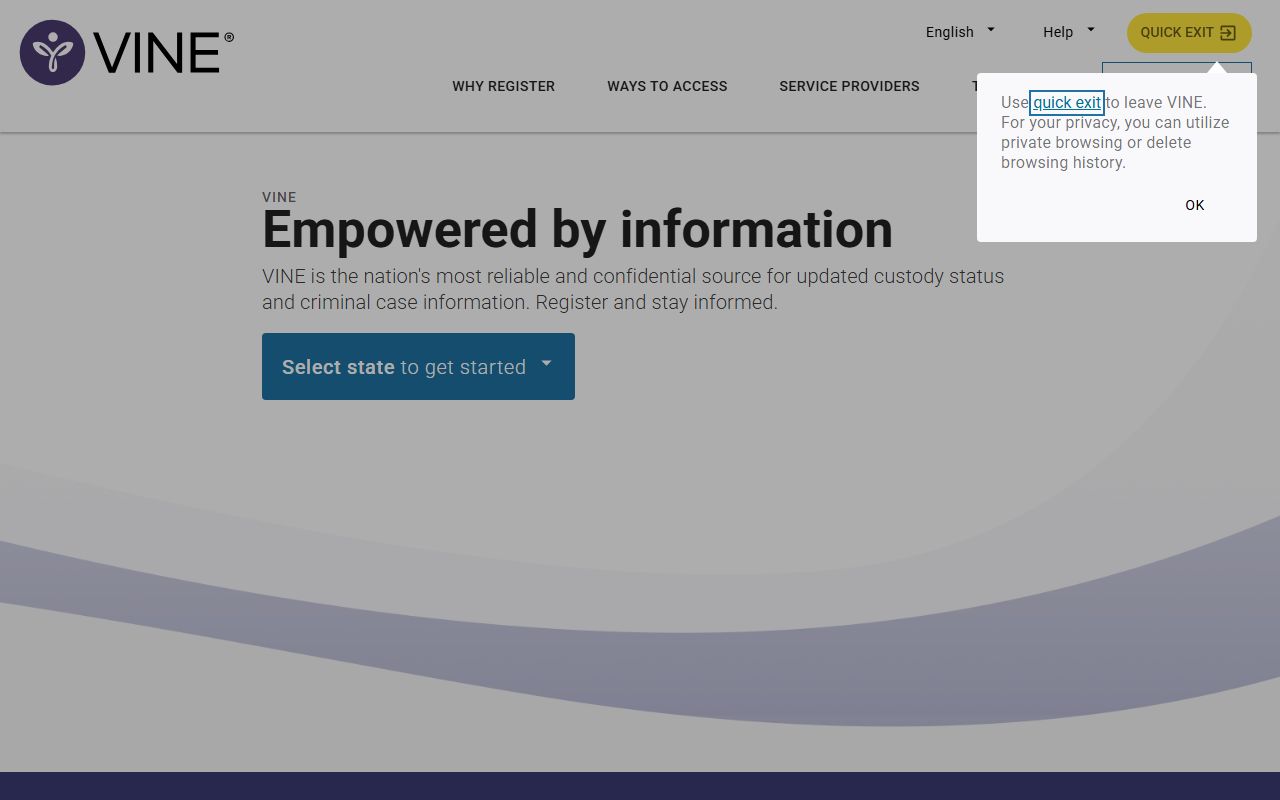
VINELink turns a one-time search into an ongoing alert, which is the easiest way to learn of a Sarasota County release as it happens.
Searching Florida Department of Corrections Releases
A person sentenced to state prison leaves the county jail and enters the Florida Department of Corrections system. The FDC runs a public release search separate from its active inmate search. Use the release search to confirm a state prison release and its date where exposed. We pull this lead-in from the Florida Department of Corrections inmate release search.
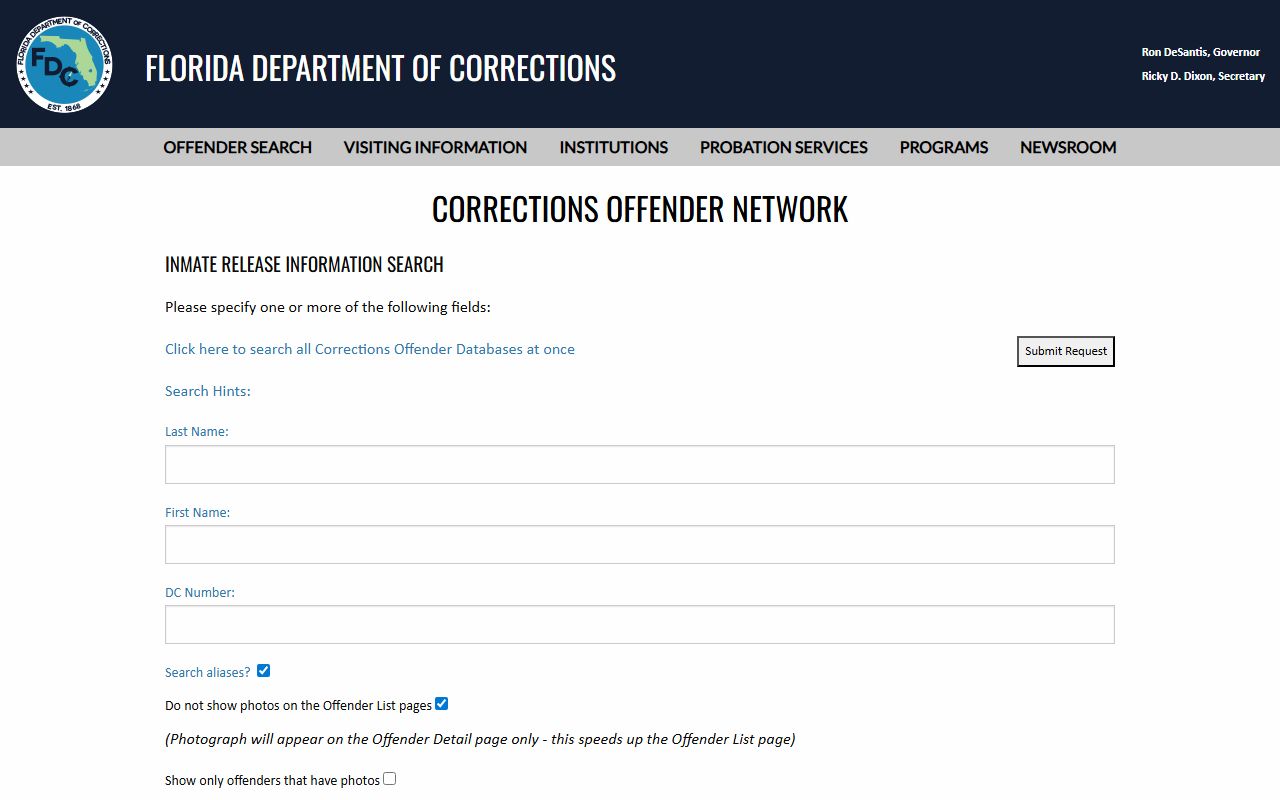
The release search is the right tool once someone has done time in a Florida prison, since the county roster only covers the local jail.
| Field Label | Type | Required | Notes |
|---|---|---|---|
| DC Number | Text | No | Exact Florida prison identifier. |
| Last Name | Text | No | Name search. |
| First Name | Text | No | Narrows the name search. |
| Release Date Range | Date | No | Narrows the release period where exposed. |
| Search | Button | Yes | Runs the release search. |
Federal Bureau of Prisons Locator
People in federal custody do not appear in county or state systems. The federal Bureau of Prisons runs its own inmate locator. It covers people in federal prisons and some who have been released. You can search by a federal number or by name with extra filters. We pull this lead-in from the federal BOP inmate locator.
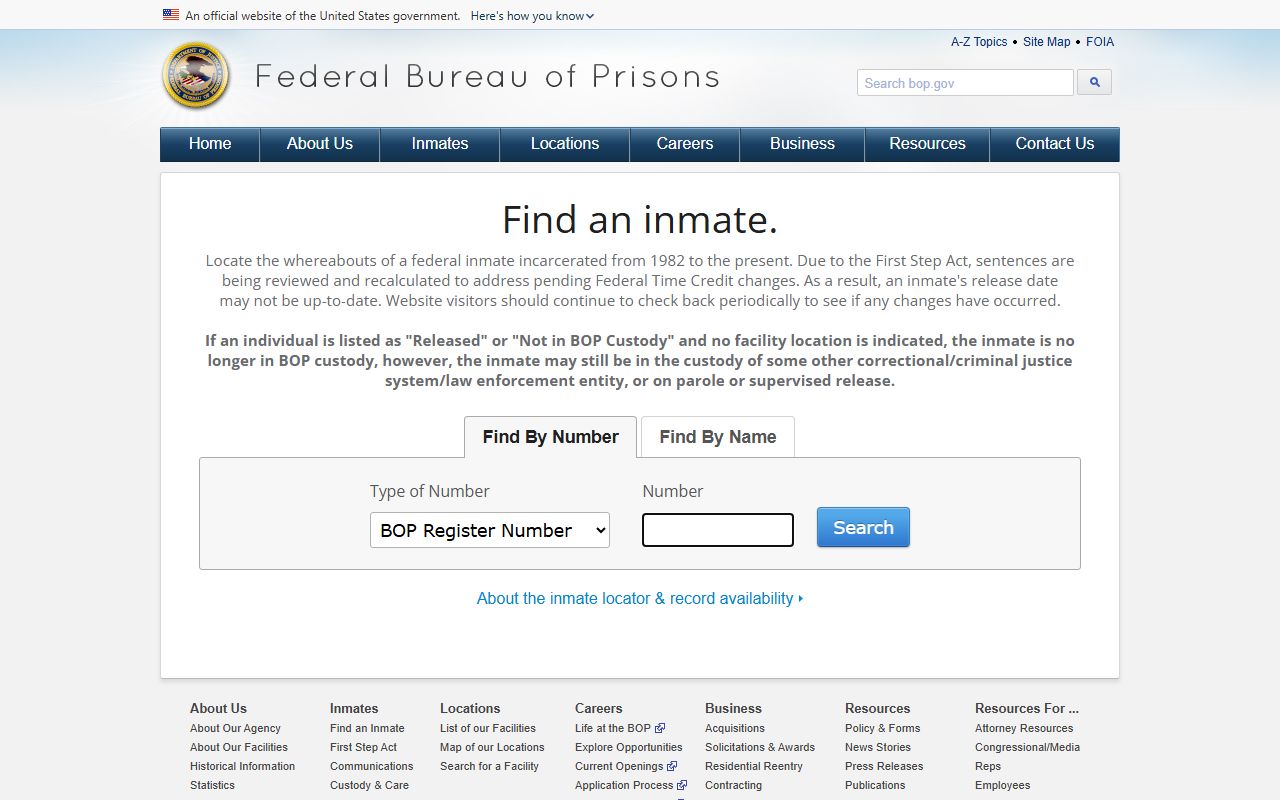
The federal locator is the right tool when a Sarasota County case moved to federal court, since federal custody is tracked apart from the local jail.
| Field Label | Type | Required | Notes |
|---|---|---|---|
| BOP Register Number | Text | No | Search by BOP, DCDC, FBI, or INS number. |
| Last Name | Text | Yes for name search | Required when searching by name. |
| First Name | Text | No | Narrows the name search. |
| Race | Dropdown | No | Narrows results. |
| Sex | Dropdown | No | Narrows results. |
| Age | Text | No | Narrows results. |
Verifying Sarasota County Release in Person
Online tools are a starting point, not the final word. For an official confirmation of a local release, call the Sheriff's Records Section at 941-861-4025 during open hours. For state prison releases, the Florida Department of Corrections is the official source. Each system answers for the custody it controls.
A release date in a search tool may lag real custody by hours. So if timing matters, confirm by phone with the agency that held the person. The court file can also explain a release. A docket entry for bond, dismissal, or sentence often lines up with the date a person left custody. Use Sarasota County court records to read that history.
In-person verification is also an option. The Sheriff's Records Section handles records during its open hours, and the Florida Department of Corrections has its own records process for state releases. Bring a clear name and any case or booking number to speed the request. Staff cannot give legal advice, but they can confirm custody facts the public record covers. For anything tied to a court order, the Clerk's office is the right place to ask.
Florida Sex Offender Registry
The Florida Department of Law Enforcement runs the state sex offender and predator registry. It is a public search. You can look by name or by location, including a county filter for Sarasota. Profiles display the offender information required by statute. We pull this lead-in from the FDLE sex offender and predator search.
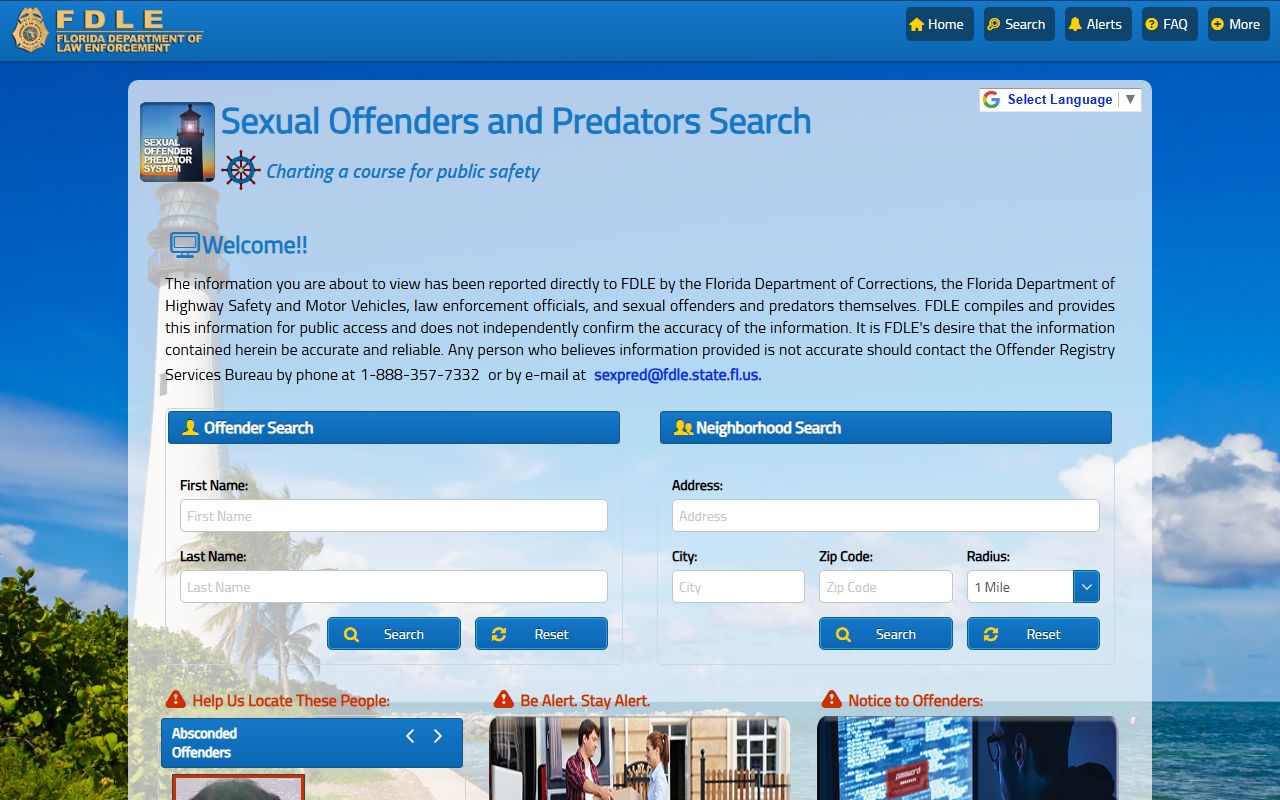
The registry is a separate public-safety tool, so a person can appear there whether or not they show up on a current jail roster.
| Field Label | Type | Required | Notes |
|---|---|---|---|
| Last Name | Text | No | Name search. |
| First Name | Text | No | Narrows the name search. |
| County | Dropdown | No | Select Sarasota for a local search. |
| City / ZIP / Address | Text | No | Location search. |
| Search | Button | Yes | Runs the registry query. |
Sarasota County Parole and Probation
Many people leave custody under supervision rather than fully free. Probation is court-ordered supervision, often instead of or after jail time. A probation case ties back to the criminal court file, so a violation can trigger a capias and a return to the docket. Florida also has a clemency and commission process for parole-related matters, but the specific board contact and supervision rules should be confirmed through official Florida sources before you rely on them.
For the supervision terms in a specific case, the court record is the best source. A violation of probation shows up as a docket entry, and a warrant may follow. To track that, see Sarasota County warrant records and the case in court records. The Public Defender for the Twelfth Judicial Circuit can represent qualifying indigent defendants in related criminal proceedings.
Reentry Resources in Sarasota County
Reentry covers the basics a person needs after release: housing, work, treatment, and benefits. Statewide and local organizations help with these, though specific provider names and contacts should be verified through official sources before you depend on them. Florida Courts self-help resources and local legal aid groups are good starting points for civil and family issues that come up after release.
- Florida Courts self-help for forms and general court-process guidance.
- Local legal aid groups for civil, family, housing, and benefits issues.
- County and community behavioral-health resources for treatment continuity.
Note: Specific reentry provider names, phone numbers, and hours were not confirmed in the sources reviewed, so verify them through official Florida and Sarasota County resources before relying on them.
Civil Rights Restoration After Sarasota County Release
A felony conviction can affect civil rights, including voting. Florida has both constitutional and statutory rules for restoring rights after a sentence, and those rules can turn on sentence completion and any legal financial obligations. Because the details are specific and can change, the final word should come from the Florida Division of Elections and the state clemency process rather than any outside summary.
Rights restoration is separate from clearing a record. Sealing or expunging a criminal record is a different court remedy. For that path, see the sealing and expunction discussion on the Sarasota County criminal records page. Civil legal aid resources can also help a person sort out which steps apply to their situation.
It helps to keep three ideas apart. Release means a person is out of custody. Restoration means certain civil rights are returned. Sealing or expunction means public access to a record is limited or removed. They are not the same thing, and one does not grant another. A person can be released and still have a public record. A person can have rights restored and still have an open case visible in the court file. Sorting out which one you need is the first real step, and official Florida sources are the place to confirm the rules for each.